


With master-planned communities springing up across its rolling hills, Northlake is quickly becoming a top destination in North Texas. Located along the fast-growing Interstate 35W corridor between Denton and Fort Worth, the town blends quiet countryside with modern suburban planning.
New neighborhoods, highly rated schools nearby, and easy access to major employment hubs are drawing steady interest from both families and professionals. But like any fast-growing community, the excitement of new homes and amenities comes with real financial considerations.
Buyers often focus on purchase price alone, yet the full financial picture includes taxes, utilities, commuting, and community fees that shape a homeowner’s monthly budget. Before making the move, it’s important to understand the broader financial landscape that defines everyday life here.
Looking closely at the Northlake cost of living helps prospective residents determine whether the town’s modern lifestyle aligns with their long-term financial goals and expected Northlake, Texas living expenses.
What Is the Overall Northlake Cost of Living?
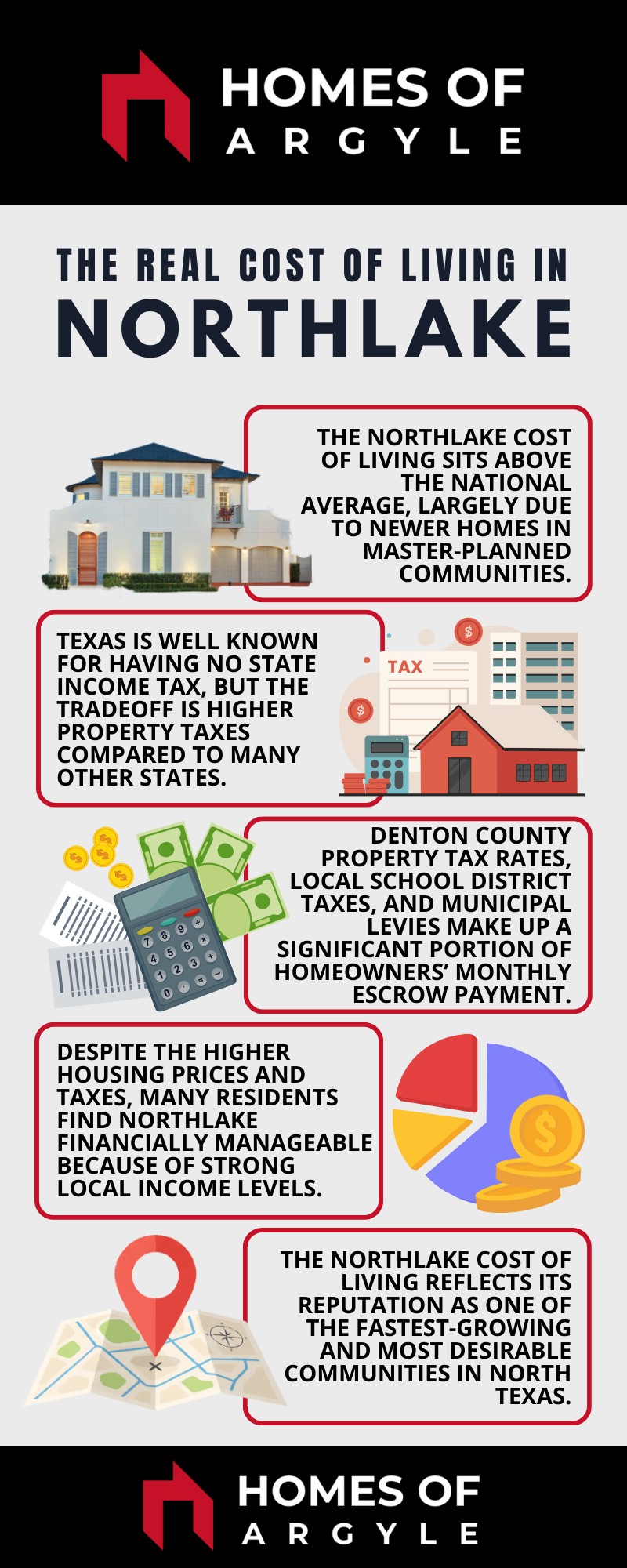
The Northlake cost of living sits above the national average, largely due to newer homes in master-planned communities.
While residents benefit from Texas’s lack of state income tax, higher Denton County property tax rates, and the typical Northlake, Texas living expenses—including utilities, HOA dues, and commuting—require thoughtful budgeting.
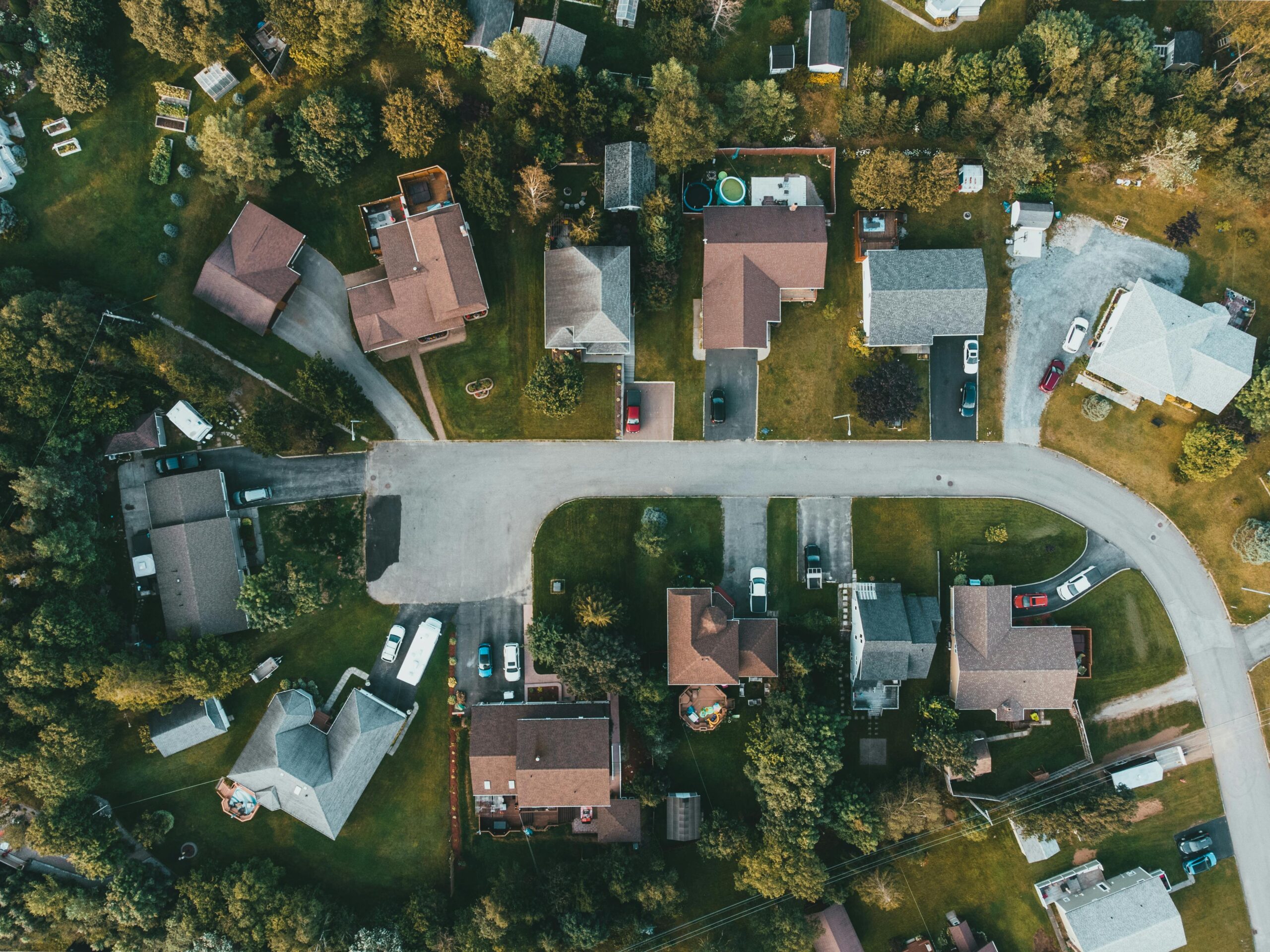
Analyzing the Housing Market Premium
The Cost of New Construction
One of the defining characteristics of Northlake’s housing market is that it is overwhelmingly dominated by new construction.
Communities such as Pecan Square, Harvest, and other master-planned developments feature recently built homes with modern layouts, energy-efficient systems, and neighborhood amenities.
Because of this, the median home price in Northlake tends to be noticeably higher than in nearby towns with older housing stock.
In many surrounding communities, buyers can find homes built in the 1980s or 1990s at lower price points. Northlake, by contrast, is largely composed of homes built within the last decade.
That newness brings benefits. Buyers often get open floor plans, updated building standards, smart-home technology, and community features like pools, parks, and walking trails. However, the tradeoff is that buyers are typically paying a premium compared to older suburbs in the region.
For many residents, the appeal of a brand-new home and a thoughtfully designed community outweighs the higher entry price. Still, it’s a major factor in the overall Northlake cost of living.
Rent vs Buy Dynamics
Unlike many cities with diverse housing options, Northlake has relatively limited rental inventory. The majority of housing consists of owner-occupied single-family homes in planned developments.
Because there are fewer apartments and older rental homes available, many residents end up purchasing rather than renting. As a result, mortgage payments often represent the largest monthly cost for households in the area.
For renters, this limited inventory can also mean higher rental prices compared to nearby cities where apartments are more common. Whether buying or renting, housing remains the biggest component of Northlake, Texas, living expenses.

Navigating Denton County Property Tax Rates
The Tax Burden
Texas is well known for having no state income tax, but the tradeoff is higher property taxes compared to many other states.
In Northlake, homeowners pay Denton County property tax rates along with local school district taxes and municipal levies. Combined, these rates can make up a significant portion of a homeowner’s monthly escrow payment.
For buyers coming from states with lower property taxes, the difference can be surprising. However, these taxes help fund public schools, infrastructure, and local services that support the town’s rapid growth.
Understanding how these taxes affect monthly payments is essential when calculating the real Northlake cost of living.
Special Assessment Districts
Another financial factor buyers should be aware of is the presence of Municipal Utility Districts (MUDs) or Public Improvement Districts (PIDs).
Many of Northlake’s newer communities use these districts to fund infrastructure such as roads, water systems, and utilities during development. In return, homeowners within those districts pay an additional tax assessment.
This extra layer of taxation can slightly increase the effective property tax rate for certain neighborhoods. Not every development has these districts, but they are common in rapidly growing areas with new construction.
Because of this, buyers should always review the full tax structure of a specific property before purchasing.

Do Northlake Household Income Stats Support the Cost?
Income and Affordability
Despite the higher housing prices and taxes, many residents find Northlake financially manageable because of strong local income levels.
Recent Northlake household income stats show a median household income significantly above the Texas statewide median. The town tends to attract professionals working in fields such as technology, healthcare, aviation, logistics, and engineering.
This highly educated demographic often has the financial capacity to support the premium housing market found in Northlake’s master-planned communities.
Higher household incomes help balance the elevated Northlake, Texas, living expenses, making the community accessible to buyers seeking long-term homeownership in a newer suburb.
The Commuter Economy
Although Northlake itself continues to grow, many residents work outside the town.
Two major employment hubs drive the commuter economy:
- The AllianceTexas corridor near Fort Worth
- The city of Denton
Both areas are within a manageable driving distance, and many professionals commute daily to offices, logistics centers, or corporate campuses.
However, commuting adds additional monthly costs. Gas, vehicle maintenance, and insurance all become part of the regular budget for Northlake residents.
While these expenses are common across North Texas suburbs, they are still an important component of the broader Northlake cost of living.
Estimating Average Utilities Northlake, TX
Monthly utilities vary depending on home size, energy efficiency, and seasonal weather patterns. Summers in North Texas can be particularly hot, which often leads to higher electricity usage due to air conditioning.
Below is a general estimate of the average utilities Northlake, TX residents may expect.
| Utility Category | Estimated Monthly Cost | Factors Influencing Price |
|---|---|---|
| Electricity | $150 – $300+ | Summer AC usage, home square footage |
| Water and Sewer | $75 – $150 | Lawn irrigation in summer |
| Internet | $60 – $100 | Fiber optic availability in new builds |
| HOA Dues | $100 – $250+ | Included community amenities (pools, gyms) |
Electricity tends to fluctuate the most throughout the year. During peak summer months, cooling costs can rise significantly, especially in larger homes.
HOA dues are another common expense because many neighborhoods include community amenities such as fitness centers, pools, event spaces, and maintained green spaces.
While these costs vary by household, they are an essential part of planning realistic Northlake, Texas, living expenses.

Key Takeaway
The Northlake cost of living reflects its reputation as one of the fastest-growing and most desirable communities in North Texas. Buyers are paying for new homes, thoughtfully planned neighborhoods, and convenient access to major job centers.
While higher home prices and Denton County property tax rates can increase monthly expenses, many residents find the tradeoff worthwhile because of the quality of life offered in the area.
By understanding the full picture—from taxes to commuting costs and average utilities in Northlake, TX—buyers can make informed decisions and confidently plan for long-term Northlake, Texas living expenses in this thriving community.
If you’re considering a move and want a clear understanding of the Northlake cost of living and overall Northlake, Texas living expenses, having a knowledgeable local guide can make all the difference.
Whether you’re comparing neighborhoods, reviewing property tax structures, or estimating your monthly costs, expert insight can help you make a confident decision. Reach out today at 469-803-9041 or email costimhinn@gmail.com to get personalized guidance and start exploring homes in Northlake with clarity and confidence.
Frequently Asked Questions
Is Northlake considered an affordable place to live compared to Denton?
Generally, Northlake is slightly more expensive than Denton due to its concentration of new construction homes and master-planned communities.
What are the typical HOA fees in Northlake master-planned communities?
HOA dues commonly range between $100 and $250 per month, depending on neighborhood amenities such as pools, parks, or fitness facilities.
Do all neighborhoods in Northlake have MUD or PID taxes?
No. While many newer developments use MUD or PID financing, not every neighborhood in Northlake has these additional assessments.
How much do average utilities in Northlake, TX cost during the peak summer months?
Electricity costs can exceed $300 per month during the hottest months, especially in larger homes with heavy air conditioning use.
Electricity costs can exceed $300 per month during the hottest months, especially in larger homes with heavy air conditioning use.
Electricity costs can exceed $300 per month during the hottest months, especially in larger homes with heavy air conditioning use.
What is the primary school district serving the Northlake area?
Most of Northlake is served by Northwest Independent School District (Northwest ISD), though boundaries may vary depending on the neighborhood.
Do the high Northlake household income stats make it difficult for first-time buyers to enter the market?
The higher home prices can create challenges for first-time buyers, but builder incentives and loan programs sometimes help reduce the barrier to entry.